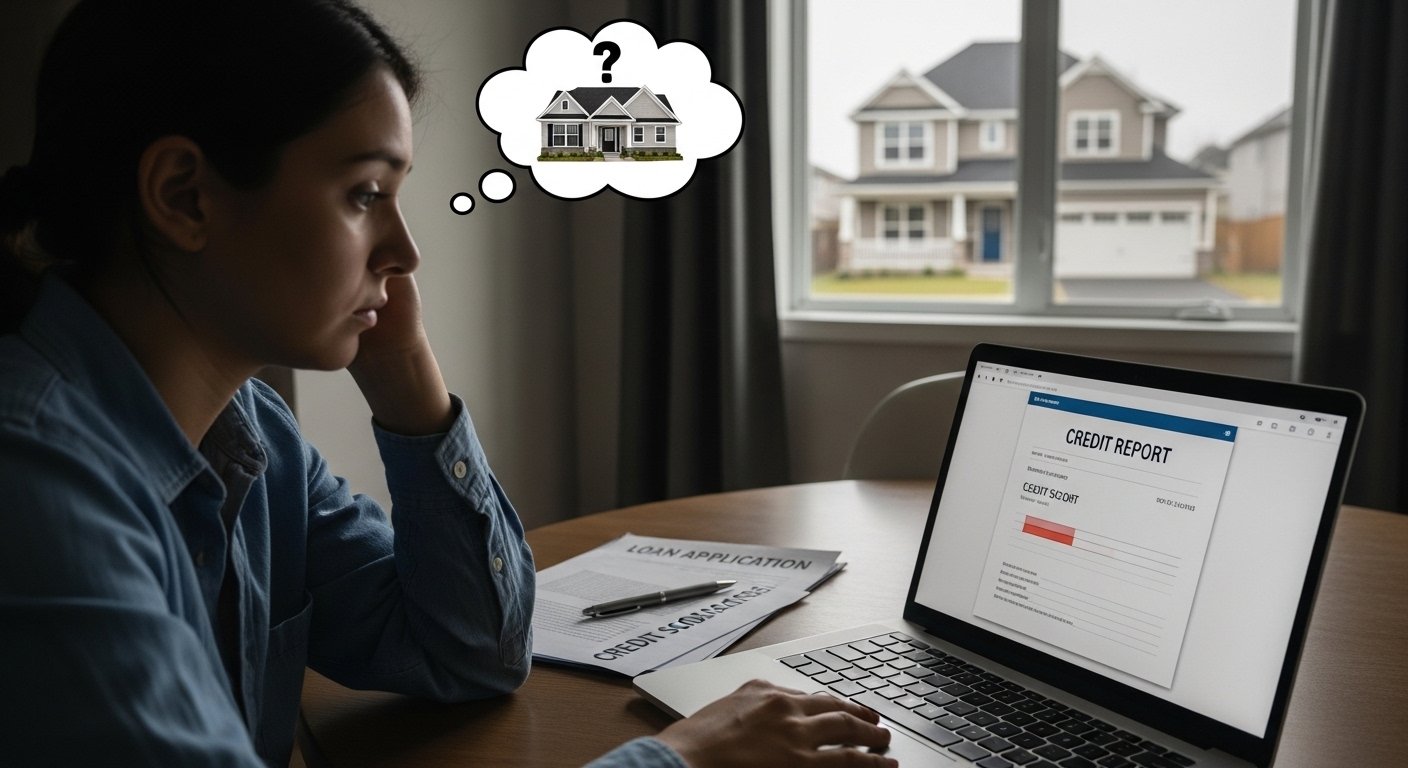
A low credit score does not automatically disqualify you from buying a home. While it makes the process more challenging and more expensive, there are legitimate loan programs designed specifically for borrowers with imperfect credit — and millions of Americans with scores below 620 become homeowners every year through these programs.
This guide explains the minimum credit score requirements for different loan types, the real cost of buying with bad credit, and the most effective strategies to either buy now with your current score or improve your credit enough to qualify for better terms in the near future.
Key Takeaways
- FHA loans allow credit scores as low as 500 with a 10% down payment, or 580 with 3.5% down.
- VA loans have no official minimum credit score for eligible veterans and service members.
- Bad credit means higher interest rates — the cost difference over 30 years can be enormous.
- A larger down payment can compensate for a lower credit score in some loan programs.
- Spending 6 to 12 months improving your credit before buying can save tens of thousands of dollars.
What Is Considered “Bad Credit” for a Mortgage?
In mortgage lending, credit scores are generally categorized as follows. Understanding where you fall helps you identify which loan programs are available to you.
| Credit Score Range | Classification | Mortgage Options |
|---|---|---|
| 760 – 850 | Excellent | All programs, best rates |
| 700 – 759 | Good | All programs, competitive rates |
| 640 – 699 | Fair | Most programs, higher rates |
| 580 – 639 | Poor | FHA (3.5% down), some VA/USDA |
| 500 – 579 | Bad | FHA (10% down required) |
| Below 500 | Very bad | Very limited — consider credit repair first |
Loan Options for Bad Credit Borrowers
FHA Loans: The Most Accessible Option
FHA loans are the most widely used mortgage program for borrowers with lower credit scores. With a score of 580 or higher, you can qualify with just 3.5% down. With a score between 500 and 579, you can still qualify but must put down at least 10%. FHA loans require mortgage insurance for the life of the loan (if down payment is less than 10%), which adds to the long-term cost.
VA Loans: Best Option for Veterans
VA loans have no official minimum credit score set by the Department of Veterans Affairs, though individual lenders typically require 580 to 620. VA loans require no down payment and no mortgage insurance, making them the most affordable option for eligible veterans and active-duty service members — even with imperfect credit.
USDA Loans: Rural Buyers With Fair Credit
USDA loans typically require a minimum score of 640, though some lenders will manually underwrite applications with scores as low as 580. They offer zero down payment for eligible rural and suburban properties and are a strong option for buyers in qualifying areas who have fair but not excellent credit.
The Real Cost of Bad Credit on a Mortgage
| Credit Score | Rate (30-yr fixed) | Monthly Payment ($250k loan) | Total Interest (30 yrs) | Extra Cost vs. 760+ Score |
|---|---|---|---|---|
| 760+ | 6.75% | $1,621 | $333,560 | — |
| 680 – 699 | 7.25% | $1,706 | $364,160 | +$30,600 |
| 620 – 639 | 8.00% | $1,834 | $410,240 | +$76,680 |
| 580 – 619 | 8.75% | $1,966 | $457,760 | +$124,200 |
Strategies to Buy Now With Bad Credit
- Save a larger down payment: A larger down payment reduces lender risk and can compensate for a lower score.
- Add a co-borrower: A co-borrower with strong credit can help you qualify for better terms.
- Work with a HUD-approved housing counselor: Free counseling can help you identify programs and create a plan.
- Consider a rent-to-own arrangement: Gives you time to build credit while locking in a purchase price.
“Buying with bad credit is possible, but the cost is real. For most buyers, spending 6 to 12 months improving their score before buying is the financially smarter move — the interest savings over 30 years far outweigh the cost of waiting.” — HUD-Approved Housing Counselor
FAQ
What is the minimum credit score to buy a house?
The minimum credit score depends on the loan type. FHA loans allow scores as low as 500 with a 10% down payment, or 580 with 3.5% down. VA loans have no official minimum, though lenders typically require 580 to 620. Conventional loans generally require a minimum of 620. USDA loans typically require 640. Below 500, mortgage options are extremely limited and credit repair is usually the recommended path.
Can I get a mortgage with a 500 credit score?
Yes, through an FHA loan with a 10% down payment. However, finding a lender willing to approve a 500-score application can be challenging, as many lenders set their own minimums above the FHA floor. You will also face significantly higher interest rates and mandatory mortgage insurance for the life of the loan. If possible, spending a few months improving your score to 580 or above will meaningfully expand your options and reduce your costs.
Does a larger down payment help with bad credit?
Yes. A larger down payment reduces the lender’s risk and can help compensate for a lower credit score. It also reduces your loan-to-value ratio, which may result in a slightly better interest rate. For FHA loans, a 10% down payment is required for scores between 500 and 579. For conventional loans, a larger down payment may help you qualify even with a score below the standard minimum at some lenders.
Should I wait to buy a home until my credit improves?
In most cases, yes — if you can meaningfully improve your score within 6 to 12 months. The interest savings from a higher credit score over a 30-year mortgage can easily exceed $50,000 to $100,000. However, if home prices in your market are rising rapidly, the cost of waiting may outweigh the interest savings. A HUD-approved housing counselor can help you weigh the trade-offs specific to your situation.